Every pool cue takes a beating over time. Whether you play league nights or just shoot a few racks on the weekend, wear and tear eventually shows up. The good news is that most pool cue problems are fixable — and catching them early saves you money. Here is a rundown of the most common pool cue problems we see at Solids-n-Stripes and what you can do about each one.
Pool Cue Problems at a Glance
| Problem | Warning Signs | DIY or Pro? |
|---|---|---|
| Mushroomed tip | Miscues, tip wider than ferrule, chalk won’t hold | DIY reshape or pro re-tip |
| Warped shaft | Wobble when rolled on flat surface, inconsistent aim | Hang to straighten or replace shaft |
| Cracked ferrule | Hairline crack, looseness, yellowing | Pro repair (lathe work) |
| Sticky shaft | Drag through bridge hand, visible grime buildup | DIY clean and burnish |
| Loose joint | Rattle when assembled, dead hit feel | Pro repair (pin replacement) |
Worn or Mushroomed Tips
This is the number one problem we see. Over time, the leather tip on your cue compresses and spreads out past the edge of the ferrule. Players call this “mushrooming.” A mushroomed tip causes miscues because the contact surface is no longer centered, and chalk does not hold as well on a flattened tip.
If the tip still has some life left, you can reshape it yourself with a tip tool or scuffer. Trim the edges flush with the ferrule and use a dime or nickel as a guide to shape the dome. If the tip is hard, cracked, or paper-thin, it needs to be replaced entirely. We handle cue re-tipping in our shop and can usually turn it around the same day. For more on choosing the right replacement, see our guide on how to choose the right cue tip.
A Warped Shaft
Roll your cue across a flat surface like a pool table. If the tip wobbles or you see a gap between the shaft and the felt, your cue has a warp. Warps happen when a cue is stored leaning against a wall, left in a hot car, or exposed to humidity swings. Wood is a natural material and it reacts to its environment.
Minor warps can sometimes be straightened by hanging the cue vertically in a climate-controlled room for a few weeks. Serious warps usually mean you need a new shaft. The best prevention is a good cue case and storing your cue upright in a rack or case — never leaning against a wall. For proper storage methods, check out our post on how to store your pool cue properly.
Loose or Cracked Ferrule
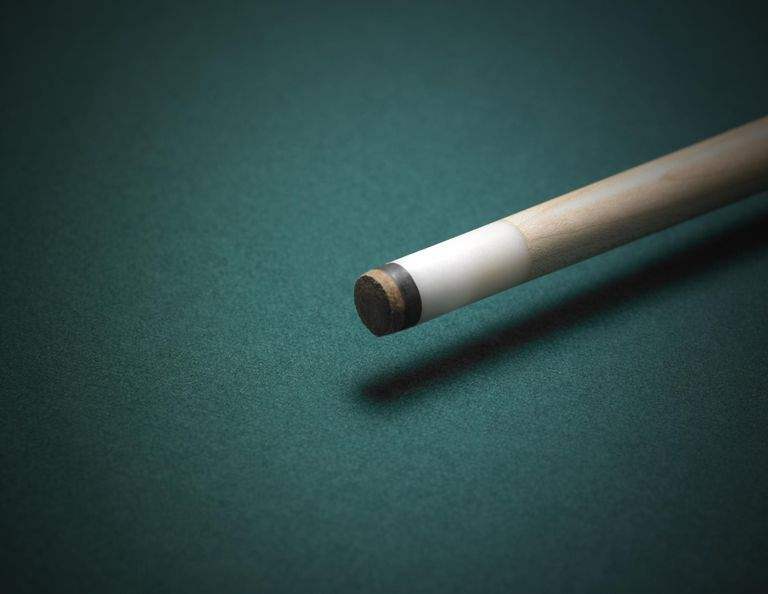
The ferrule is the small white or ivory-colored piece between the tip and the shaft. It absorbs impact every time you strike the cue ball. Over time, ferrules can crack, come loose, or develop a yellowish discoloration. A cracked ferrule changes how energy transfers to the cue ball and can damage the shaft underneath if ignored.
Ferrule replacement is a shop job — it requires precise turning on a lathe to get the diameter and length right. If you notice your ferrule is loose or has a hairline crack, stop playing on it and bring it in before the damage spreads to the shaft.

Sticky or Rough Shaft
After months of play, your shaft picks up oils from your hands, chalk dust, and grime. The result is a shaft that drags through your bridge hand instead of gliding smoothly. This affects your stroke and your accuracy.
Clean your shaft regularly with a lightly damp cloth, then dry it immediately. For deeper cleaning, a shaft cleaner and burnishing pad work well. Avoid household cleaners, sandpaper, or anything abrasive — these strip the finish and open the wood grain, making the problem worse long-term. A clean shaft slides better and lasts longer.
Loose Joint or Rattling
If your cue rattles or feels loose when you screw the two halves together, the joint may be worn. Most cues use a steel, wood, or phenolic joint pin. Over time, the threads can wear down or the joint collar can loosen. A rattling joint deadens the hit and makes the cue feel inconsistent.
First, make sure both joint faces are clean — chalk dust and debris can prevent a tight fit. If cleaning does not fix it, the joint pin or collar may need to be replaced. This is another repair best left to a professional, since the pin has to be drilled and set precisely.
When to Repair vs. Replace
Not every cue is worth repairing. A $30 house cue with a warped shaft is better replaced. But a quality cue from a brand like McDermott or Pechauer is almost always worth fixing. Tips, ferrules, wraps, and even shafts can be replaced — the butt is usually the most valuable part of the cue.
These are the pool cue problems we fix most often at Solids-n-Stripes, and none of them mean your cue is done for. If you are not sure whether your cue is worth the repair, bring it by our shop at 2901 NW 16th St in Oklahoma City. We will take a look and give you an honest answer. Call us at 405-942-1848 or just stop in — we are happy to help.